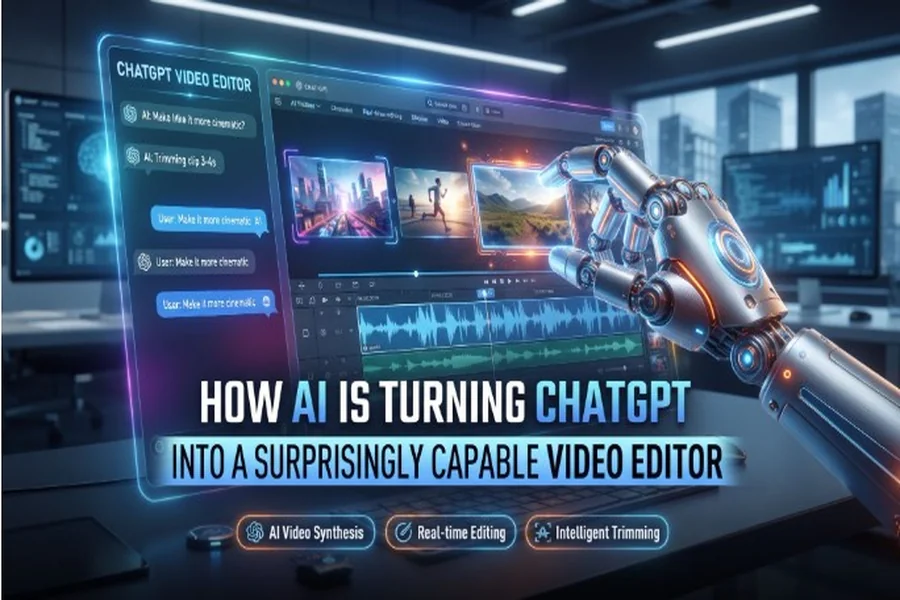
Video editing once demanded expensive software and years of practice. Today, artificial intelligence is changing that reality fast. ChatGPT, long known for text generation, now plays a growing role in video workflows. Creators are discovering new ways to plan, script, and refine footage using conversational AI. Meanwhile, this shift signals a broader transformation across the creative industry. Understanding how it works helps explain why adoption keeps rising. Marketers, educators, and small businesses now watch this shift closely, since faster editing directly affects publishing schedules.
The Rise of AI-Driven Video Creation
AI tools have moved far beyond simple text generation. Consequently, they now assist with visual storytelling too. ChatGPT helps writers outline scripts before filming even begins. It also suggests scene structures, pacing, and dialogue improvements. As a result, editors spend less time on early planning stages and gain more time for creative decisions. This efficiency appeals to solo creators and small teams alike. It lowers the barrier for beginners entering video production. Even hobbyists can now approach editing with real confidence. Social media schedules reward speed, so quicker planning matters more than ever.
From Text Prompts to Timeline Edits
Traditionally, video editing required manual trimming and careful layering. However, AI-assisted workflows are simplifying that process significantly. Users can now describe a desired outcome in plain language. Afterward, AI systems translate those instructions into actionable edits. For instance, a creator might request tighter pacing in one scene. The system then suggests specific cuts or transitions. This conversational approach feels intuitive, even for non-technical users. Therefore, more people are experimenting with AI-guided editing techniques. Additionally, iteration happens faster than with manual methods alone. Small changes no longer require reopening an entire project file.
Why Creators Are Turning to ChatGPT for Video Tasks
Many creators use ChatGPT for brainstorming before touching a timeline. Others use it to write captions, titles, and video descriptions. Meanwhile, some rely on it to organize raw footage logically. This versatility makes it a practical companion throughout production. Indeed, the tool adapts to nearly every stage of a project. Consequently, workflows become more connected and less fragmented. Instead of switching between multiple apps, creators consolidate tasks in one place. This convenience saves time during tight production schedules. Ultimately, that saved time translates into more polished final videos.
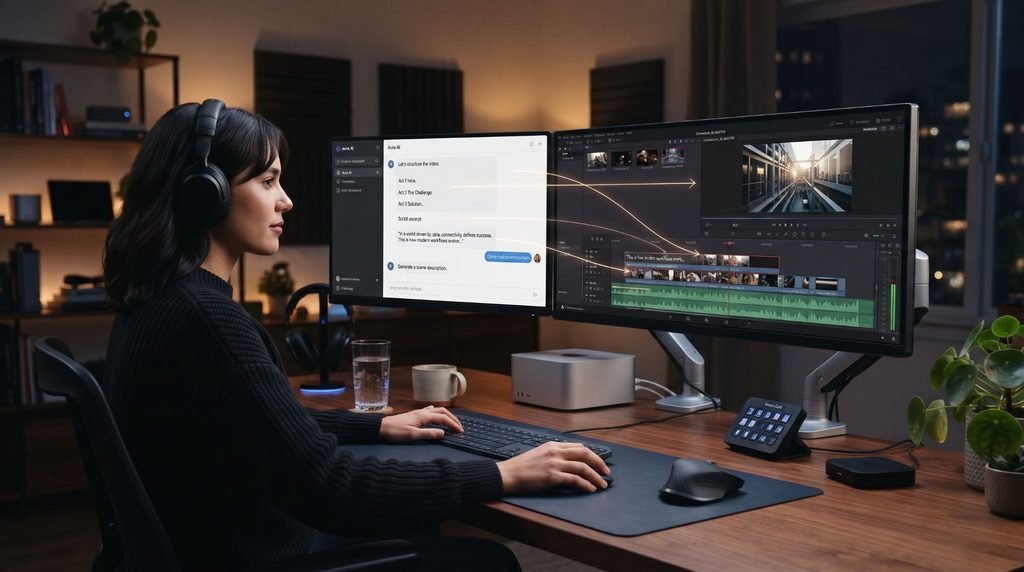
Platforms are also building direct integrations to support this trend. For example, some editing suites now connect a ChatGPT video editor workflow directly into their timeline tools. This integration lets creators move from conversation to finished clip without switching platforms. As a result, ideas turn into usable footage more efficiently. Such tools bridge the gap between language models and visual production software, and that bridge keeps getting shorter.
The Role of Context and Automation in Modern Editing
Context matters greatly in video editing work. A single scene can carry different meanings depending on pacing. Therefore, AI systems must understand narrative intent, not just raw instructions. ChatGPT’s language understanding helps it interpret nuanced editing requests accurately. For example, it can distinguish between a dramatic pause and a slow scene. This contextual awareness improves the quality of automated suggestions overall. Meanwhile, automation handles repetitive tasks like formatting or resizing footage. Consequently, editors focus on storytelling instead of technical repetition. Over time, this combination produces more consistent creative output across projects.
Where ChatGPT Fits Into a Creator’s Toolkit
ChatGPT is not replacing traditional editing software entirely. Instead, it complements existing tools within a broader workflow. Editors still rely on dedicated platforms for color grading and audio mixing. However, ChatGPT strengthens the planning and refinement stages around those tasks. Many creators now treat it as a first-draft assistant. Afterward, they polish the results using specialized editing applications. This layered approach balances speed with professional quality standards. Additionally, it reduces the learning curve for newcomers to video production. As adoption grows, more platforms keep exploring similar AI-assisted approaches. This hybrid method suits both hobbyists and seasoned professionals equally well.
Practical Benefits for Everyday Creators
Smaller creators often lack access to large production teams. Consequently, AI assistance offers meaningful support for solo work. ChatGPT can generate shot lists based on a simple concept. It can also draft voiceover scripts aligned with a video’s tone. Meanwhile, it suggests edits that match audience expectations for pacing. These capabilities help independent creators compete with larger studios. Furthermore, they reduce production costs without sacrificing overall quality. As a result, more diverse voices can produce professional-looking content. This shift marks a meaningful change across the creative landscape. Freelancers, in particular, benefit from tools that shorten each production cycle.
Challenges Still Worth Considering
Despite its strengths, AI-assisted editing still has limitations. ChatGPT cannot physically manipulate footage on its own. Instead, it relies on integrations with capable editing platforms. Therefore, results depend heavily on the tools connected to it. Additionally, creative judgment remains essential throughout the entire process. AI suggestions still require careful human review and refinement. Otherwise, videos risk losing a personal creative touch. Understanding these boundaries helps creators use AI more effectively. Recognizing these limits early prevents frustration later in the editing process. Ultimately, balance between automation and human input produces the best outcomes.
The Future of AI in Video Production
Looking ahead, AI’s role in video editing will likely expand further. Language models are steadily becoming better at understanding visual context. Consequently, their suggestions will grow more precise over time. Developers continue refining how these systems interpret creative intent. Meanwhile, integrations between chat-based tools and editing software keep improving. This progress suggests a future where editing feels more conversational. Creators may soon direct entire projects through natural dialogue. Such advancements could reshape how video content gets made. Voice commands and richer visual understanding will likely accelerate this trend even further. As these tools mature, adoption will likely accelerate across the industry.
Final Thoughts
AI is reshaping video production in practical, measurable ways. ChatGPT now supports planning, scripting, and refinement throughout the process. Meanwhile, integrations with editing platforms continue expanding its real capabilities. Creators benefit from faster workflows and noticeably lower production barriers. However, human creativity remains central to compelling storytelling. As AI tools evolve, they will likely become standard parts of editing pipelines. For now, they offer a valuable head start rather than a full replacement. Creators who embrace these tools early will likely gain a lasting competitive edge. This balance defines the current era of AI-assisted video creation.