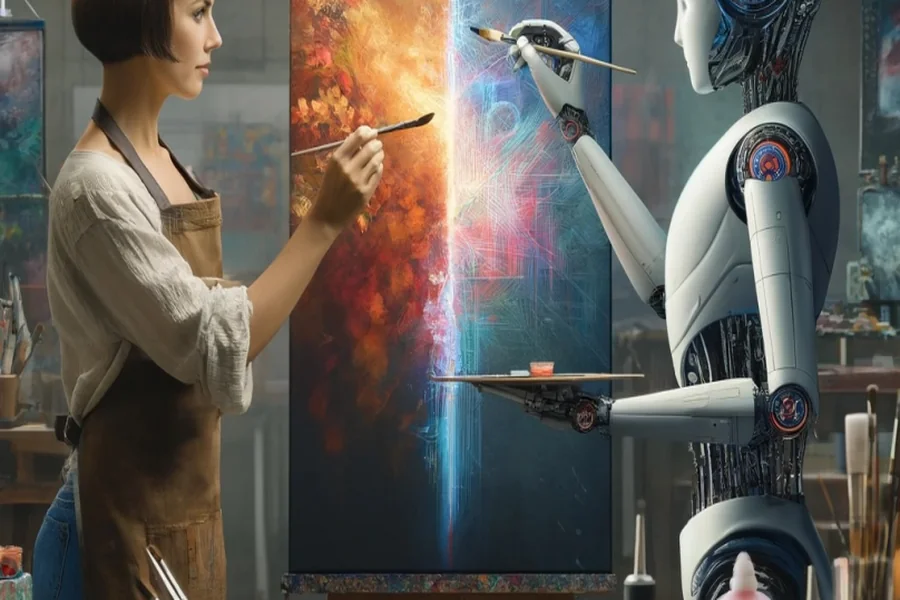
Visual content has become essential to how businesses communicate online. From social media campaigns and product pages to presentations and educational materials, images often determine whether an audience notices and understands a message. Yet producing original visuals consistently can be challenging, particularly when teams face tight deadlines, limited budgets, or a constant need for new creative concepts.
AI image generation is changing this workflow by helping users turn written ideas into visual concepts more quickly. Instead of beginning every project with photography, illustration, or complex design software, creators can experiment with descriptions and develop several possibilities in less time. This does not remove the need for human creativity. Rather, it gives professionals another resource for exploring ideas, testing visual directions, and developing content that fits different digital formats and audience expectations.
Why Visual Content Production Is Becoming More Complex
Digital audiences encounter an enormous volume of visual information every day. Businesses therefore need content that is not only attractive but also relevant to a specific message, audience, and platform. A single marketing campaign may require images for websites, social posts, email campaigns, presentations, advertisements, and video thumbnails.
Traditional production methods can make this process time-consuming. Photography requires planning and suitable locations, while custom illustration and graphic design may require specialized skills. Stock libraries provide convenience, but available images do not always match a project’s exact concept.
Generative technology offers another option during the creative process. An AI picture generator can help creators develop visual concepts from written descriptions, giving them a starting point for further refinement. This can be particularly useful during brainstorming, when teams want to compare different approaches before committing resources to final production.
Human review remains essential because the generated result still needs to match the project’s purpose, audience, and quality standards.
Turning Written Ideas Into Visual Concepts
One of the most significant advantages of generative image technology is the connection between language and visual development. A creator can describe a subject, environment, mood, composition, or artistic direction and use that description to explore possible imagery.
This capability can make early-stage ideation more efficient. Consider a content team preparing a campaign about sustainable travel. Instead of immediately arranging photography, designers could explore several conceptual directions to determine which visual approach best supports the campaign’s message.
The same principle applies to educational and editorial work. Teachers may need illustrations for complex topics, while publishers can explore visual concepts that complement written material. Independent creators can also experiment with different styles before choosing a direction for a larger project.
However, generated images should be treated as creative inputs rather than automatically finished assets. Details may require correction, and the final image should be reviewed for accuracy, composition, consistency, and suitability. Human judgment remains central to deciding which concepts are worth developing further.
Improving Efficiency While Maintaining Creative Control
Speed is another reason organizations are incorporating AI into visual workflows. Developing an image traditionally may involve research, concept development, photography or illustration, editing, and several rounds of revisions. Generative tools can help shorten the early exploration stage, allowing teams to evaluate ideas before investing heavily in production.
This efficiency can be especially valuable for smaller organizations that do not have large creative departments. Instead of replacing designers, AI-assisted tools can give them additional ways to experiment and prepare concepts. Designers can then spend more time refining selected ideas, maintaining visual consistency, and making decisions that require professional judgment.
Creative control is particularly important when visuals represent real products, people, locations, or technical subjects. Generated content can contain inaccurate details or unexpected elements, so every important asset should undergo appropriate review.
A practical workflow may involve generating several concepts, selecting the strongest option, refining the direction, and completing final edits manually. This approach combines technological speed with human oversight.
Applications Across Modern Digital Workflows
AI-generated imagery can support many stages of digital content production. Marketing teams can use it to explore campaign concepts, while social media professionals can develop ideas for posts, thumbnails, and other visual formats. Businesses can also experiment with illustrations for presentations, internal communications, and educational resources.
Video creators may use generated imagery during storyboarding or concept development. A visual representation of a scene can help teams discuss composition and atmosphere before production begins. Similarly, designers can use generated concepts as references when developing final graphics through conventional editing workflows.
Organizations should nevertheless establish clear standards for using generated content. Commercial projects may involve brand guidelines, factual accuracy requirements, intellectual property considerations, and platform-specific policies. These factors should be reviewed before an image becomes part of a public-facing campaign.
The most effective approach is therefore not simply to generate more images. It is to use AI where it provides genuine value within an organized creative process. When combined with human review, generative technology can help teams explore more ideas while maintaining control over the final result.
Conclusion
AI image generation is becoming a practical component of modern visual content workflows. By helping creators translate written ideas into visual concepts, the technology can make brainstorming faster and provide additional flexibility during production. Its value extends across marketing, education, publishing, social media, presentations, and video development.
However, efficiency should not come at the expense of quality or judgment. Generated visuals still need to be evaluated for accuracy, relevance, composition, consistency, and audience suitability. Human expertise